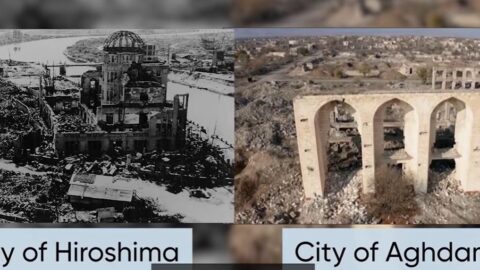
Leila, an Azerbaijani architect with a master’s in the theory and history of architecture, responds to Jasmine’s video about the secrets in Yerevan, expanding the conversation to address the broader erasure of Azerbaijani heritage in Armenia.
Destruction of the Irevan Fortress: The historically significant Irevan (Yerevan) fortress — once depicted in paintings and commemorative medals as a majestic structure with domes and minarets — was almost entirely demolished, leaving only a mosque and its foundations. Its destruction occurred in 1964.
Erasure of an Entire Historical Center: By the mid-20th century, over 800 houses, mosques, the Khan’s Palace, bathhouses, and other structures were wiped out. The Khan’s Palace — once considered one of the most beautiful in the East and where the famous play Woe from Wit was staged — was replaced by a brandy factory.
Tamanyan’s Master Plan: A monument honoring architect Alexander Tamanyan stands in Yerevan for a city master plan that explicitly made no allowance for preserving the historical center — something Leila notes would earn failing grades in urban planning programs worldwide.
Renaming of Places: When Armenians settled in the lands of the Irevan Khanate, they systematically renamed rivers, mountains, cities, and villages — changing Azerbaijani/Turkic toponyms to Armenian ones. Old Russian military maps show no Armenian geographic names in the region.
Destruction in Karabakh: She highlights that during the 27-year occupation of Karabakh, 63 of 67 mosques were destroyed, along with cemeteries, libraries, museums, and tombs — including the grave of the celebrated poet Khurshidbanu Natavan.
Demographic History: Referencing historical documents and demographer Zamen Corcodian, Leila notes that of 400,000 Azerbaijanis in the Irevan governorate in 1916, only 10,000 remained four years later — 130,000 killed and over 200,000 displaced as part of mass Armenian resettlement encouraged by Russian imperial policy post-1827.
A Call for Dialogue & Preservation: Despite the weight of these grievances, Leila ends on a hopeful note — inviting Jasmine and history enthusiasts to visit Azerbaijan to witness both destroyed and restored heritage, emphasizing that history is cyclical and that happiness, not revenge, should be humanity’s shared goal.
You May Also Like
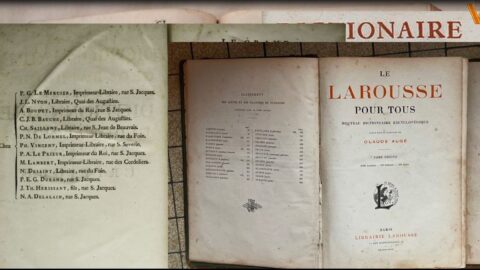

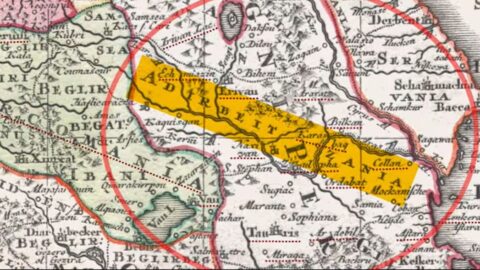


First Maps, Then Mosques, Then People…
04/11/2025




Kocharyan: a silly man or a liar?
16/01/2025