Recently, it has become increasingly common to hear the names Zangezur Corridor, Zangezur, Eastern Zangezur, and Western Zangezur in international discourse. While Armenians refer to this region as Syunik, understanding the origin of these terms requires an analysis of the region’s history, demography, and geopolitical weight.
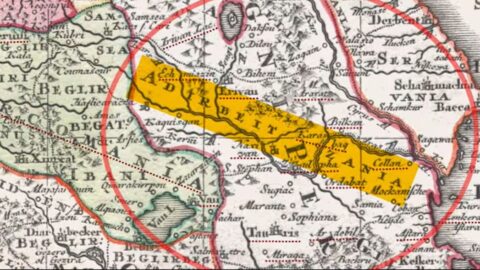
Zangezur is a name for a geographical region documented in ancient historical sources. Historical evidence confirms that until 1920s, Zangezur was consistently mentioned as an Azerbaijani territory in all international documents, maps and official correspondence. Throughout various periods, Zangezur was an integral part of the Seljuk Empire, as well as the Azerbaijani states of Garagoyunlu, Aghgoyunlu, and the Safavids. Notably, no Armenian state existed on these territories until the 20th century.
The region consisted of ten Azerbaijani khanates and several Georgian kingdoms when the Russian troops advanced into the Caucasus in the 19th century. The major treaties of that era – the Kurekchay, Gulustan, and Turkmenchay – make no mention of an Armenian population in the area.
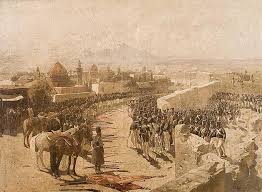
But everything changed following the Turkmenchay Treaty. The Russian Empire decided to establish an Armenian Province (Armianskaya Oblast) on the lands of the occupied Irevan and Nakhchivan khanates – an administrative entity that had never previously existed.
This marked the beginning of large-scale Armenian resettlement in the Caucasus:
• On March 8, 1828, Armenians from Iranian Maragha began moving to these lands under the orders of Russian General Paskevitch.
• On March 21, 1828, the Armenian province was officially established.
• Tens of thousands of Armenians were resettled from Persia and Ottoman Turkey into Irevan, Nakhchivan, and Garabagh.
• The period following the 1877-1878 Russian-Ottoman War marked a second wave of Armenian resettlement.
For the Russian Empire, ethnic Armenians were seen as reliable allies to whom they could entrust the implementation of imperial policies in the region. Later, Russians became leery of political loyalty of Armenians. But it is a completely different story.
Interestingly, the term ‘Armenia’ has no semantic relation to the self-appellation of the people who call themselves Armenians. They refer to themselves as Hay, and their country as Hayastan. Originally, ‘Armenia’ was a name for a geographical province, known since time immemorial as Armani, Armina, Harminuya, and so on.
Just as people living in the Caucasus refer to themselves as Caucasians regardless of their ethnicity, the diverse peoples inhabiting the geographical province of Armenia were historically called Armenians. But they were not Armenians by ethnic background. According to Armenian scholar Philip Ekoziants, the title ‘Armenian’ was historically attributed to Turkic-speaking Muslims. Yet it is known that the present Hay people has never been Muslim.
Ekoziants notes: “Initially, the term ‘Armenia’ was designated by geographers and cartographers to one of the regions in Asia. All the dwellers of that region were called Armenians, with the majority of the population inhabiting that Armenia being Muslims. So anyone living in Armenia was called Armenian. Shortly after, it’s become common to attribute the term ‘Armenian’ to any member of a Christian sect, with attempts to transform the region of Armenia to a Christian state of Armenia.”
The resettlement of Armenians into South Caucasus was followed by a series of tragic events. Like the incident with driving the local Azerbaijanis out of their native lands. Between 1905-1907 and 1914-1920, dozens of Muslim villages in Zangezur were wiped out, the majority of their inhabitants died or left their homes.
A second wave of displacement took place in 1988-1989, forcing over 250,000 Azerbaijanis to flee Zangezur, Irevan and other provinces. Today, no ethnic Azerbaijanis remain in modern-day Armenia. Hundreds of historical and cultural artefacts of Azerbaijani legacy of the region were destroyed.
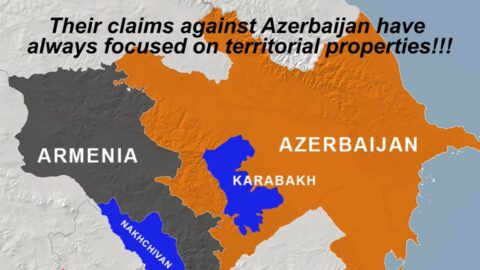
As we can see, the term ‘Armenia’ has gone through a process of historical evolution, when it was initially attributed to a geographical region, then a province within the Russian Empire, and finally the Republic of Armenia established after the collapse of the Russian Empire. Following its emergence in 1918-1920, the Armenian Republic initiated a series of wars claiming the territories of Azerbaijan and Georgia, in attempt to occupy Garabagh, Zangezur, Nakhchivan, Borchaly, and Akhalkalaky.
On April 28, 1920, the Bolshevik troops invaded Azerbaijan. The Soviet rule was established in Armenia at the end of November 1920. Within several days, in early December 1920, the western part of Zangezur was transferred to the Armenian Soviet Socialist Republic (SSR), which had already been cleansed of the majority of indigenous population – Azerbaijanis. This decision was part of the Soviet strategy to strengthen control over the South Caucasus.
Interestingly, one of the favourite subjects of discussions in Armenia is a common misconception about the alleged transfer of the so-called “Armenian lands” of Upper Garabagh and Nakhchivan to the Azerbaijani Soviet Socialist Republic by Joseph Stalin in early 1920s. Indeed, Stalin has been actively involved in all the processes that took place in the South Caucasus during his term as the head of the People’s Commissariat for Nationalities. However, he considered all the Azerbaijani territories as a bargaining chip in a bigger strategic game. Reportedly, even before the establishment of the Soviet rule of law in Armenia, Stalin used to support Armenian territorial claims to Azerbaijan, particularly to Zangezur.
The documentary evidence in the Azerbaijani archives shows that the decision was adopted by the Soviet central government without the involvement of the local population of the region. Zangezur was transferred to Armenia with the purpose to block the direct overland connection between Azerbaijan and Türkiye. With Moscow having had real concerns over the possible emergence of Azerbaijani-Turkish alliance, the idea was to disrupt the unity of the Turkic world. As a result, Nakhchivan was cut off from the mainland Azerbaijan.
At the turn of 1990s, Armenia revived military operations against Azerbaijan and occupied a fifth of Azerbaijani territories. Cities, towns and villages were destroyed, the local population was expelled.
Throughout the 20th century, more than two thousand Azerbaijani geographical names have been renamed to Armenian ones. For example, Irevan became Yerevan, Goycha Lake became Sevan, Zod became Sotk, the Zangi River became Razdan, and Zangibasar became Masis. As for Zangezur, Armenians still call it Syunik. Incidentally, Zangezur, as well as the settlements of Zangibasar and Zangilan derive their names from the same Zangi River.
- Irevan became Yerevan
- Goycha Lake became Sevan
- Zod became Sotk
- Zangi River became Razdan
- Zangibasar became Masis
- As for Zangezur, Armenians still call it Syunik.
- Zangezur, as well as the settlements of Zangibasar and Zangilan derive their names from the same Zangi River.
Azerbaijan re-established its territorial integrity only after thirty years – following the 44-day war. In 2021, the districts of historical Zangezur were incorporated into the Eastern Zangezur Economic Region.
Today, there is active diplomatic involvement from the United States in the region. On August 8, 2025, Armenian Prime Minister Nikol Pashinian and Azerbaijani President Ilham Aliyev, through the mediation of Donald Trump, initialled the agreement to normalise relations between the two republics. A central element of this pact is the Trump Route for International Peace and Prosperity (TRIPP), also known as the Zangezur Corridor under American administration.
Many, including in Armenia, hope that these changes and this route will bring a real and long-standing peace to the region.
It is possible then that this region will again be known in Armenia by its historical name of Zangezur. Or will Armenians continue to refer to the region with a made-up term “Syunik”?